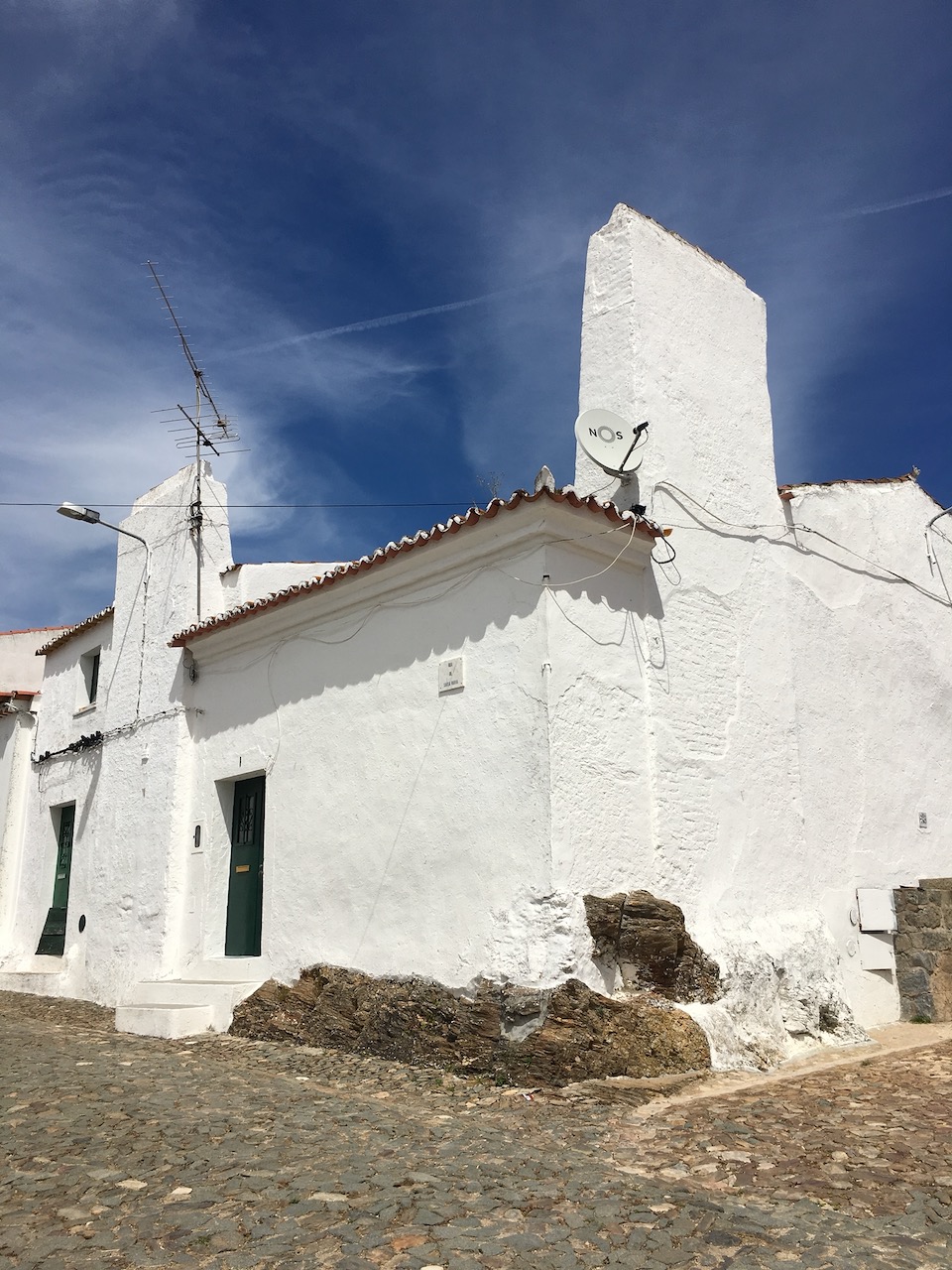
A gastronomic guide to Alentejo
Alentejo means beyond the Tejo — that is what the word literally says. A third of Portugal, named after the river you have to cross to get there, and cooking as if the crossing had changed everything.
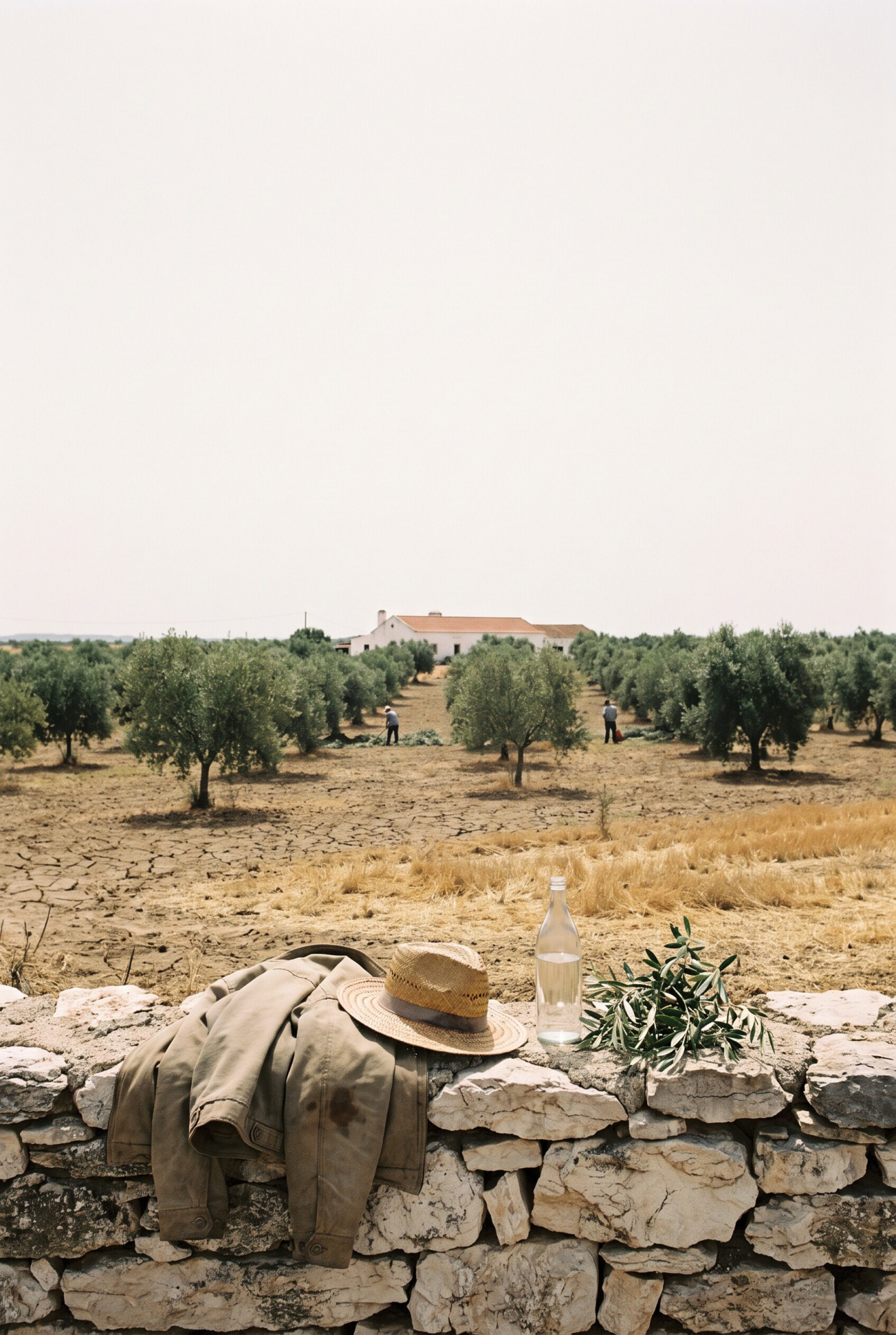
We wrote this the way we build a tour: by going back. Back to the same bakers in winter, the same grove at harvest, the same clay cellars in the week the pots are opened. Part of it comes from the olive grove we work ourselves in the Alentejo, where we pick with our guests and press oil in the same days. The rest comes from producers who let us into their kitchens, their mills and their sheds, and then answered the follow-up questions.
Alentejo is easy to romanticise and hard to eat well in if you do not know when to be there. So this guide is organised by season and by producer rather than by town: what is ripe, who is making it, and which dish that turns into.
It is for travellers with a car, a week and an appetite, and for cooks who ate something once and could not reproduce it at home. It answers the two questions our guests ask most: what should I be eating in this month, and where do I buy it to take home? Read it before you book the week. Use it at the market.
Take a taste of Alentejo home: the cracked olives of Chapter Five are in the shop; the harvest of Chapter Four is a day you can join.
Bread, olive oil and the montado — a season-by-season guide to eating in southern Portugal. Twelve chapters, in the order we would travel them:
- 1. Beyond the Tejo — Why a region named after a river it does not sit on ended up with a pantry of its own: heat, distance and a farmed landscape called the montado.
- 2. Bread first — Açorda, migas and gaspacho: three dishes built to use up yesterday's loaf, and how to tell in one spoonful which kitchen does them properly.
- 3. Portuguese olive oil, variety by variety — Galega, cordovil and verdeal: how each one tastes, why early-harvest oil burns the back of your throat, and how to read a label without help.
- 4. The olive harvest — What happens in the grove and in the mill between November and January, and how to spend a day of it with your sleeves rolled up.
- 5. Azeitona britada — The cracked green olives every Alentejo house cures in brine: the method, the herbs that go in the jar, and why the split in the skin is the whole point.
- 6. The montado — Cork oaks, holm oaks, acorns and pigs: how a landscape that looks like nothing is happening produces the region's most talked-about pork.
- 7. Cheese made with a flower — Serpa, Nisa and Évora: sheep's milk curdled with cardoon thistle instead of animal rennet, which is why you cut a lid and eat them with a spoon.
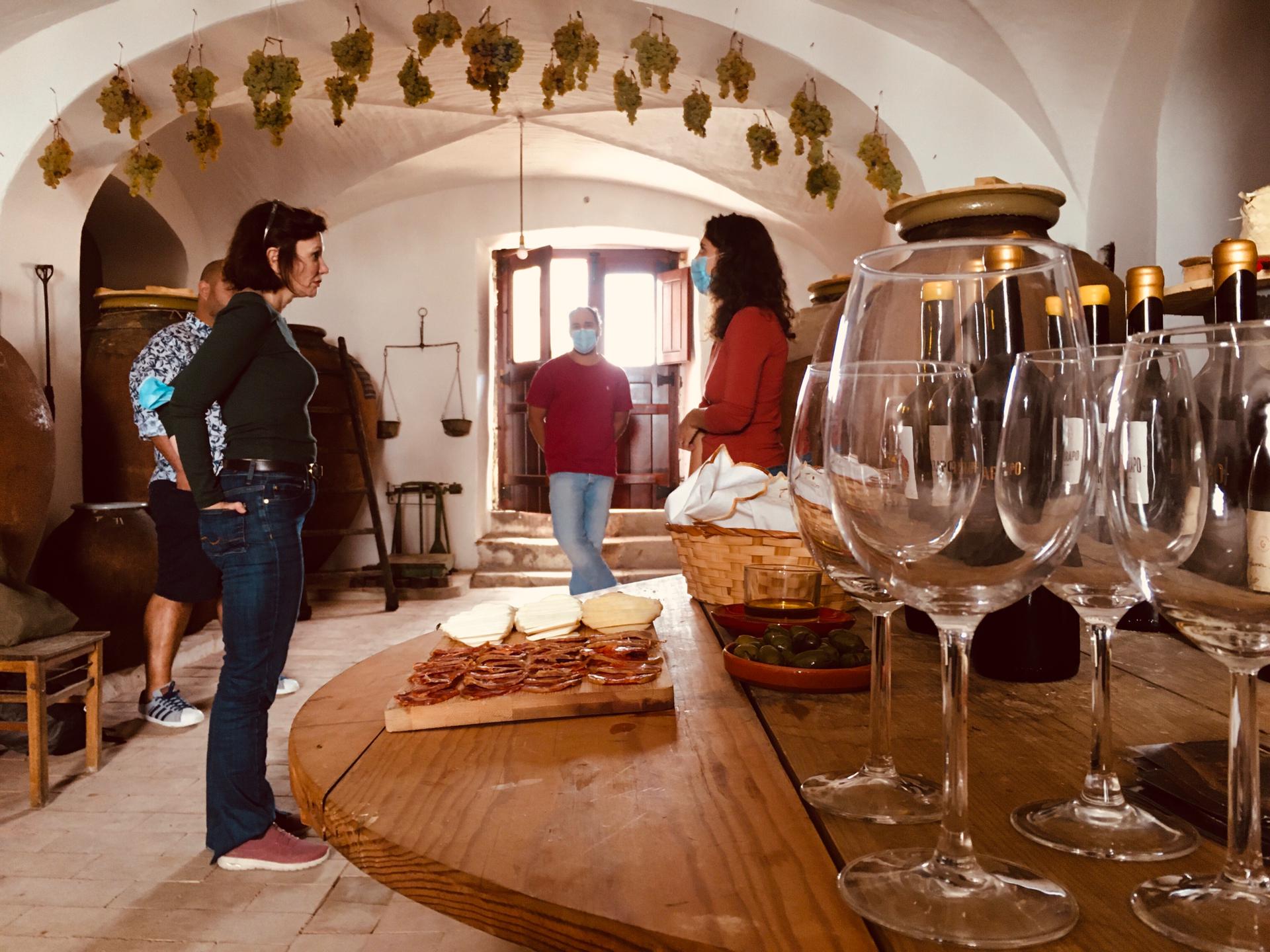
- 8. Vinho de talha — Wine still fermented in clay pots, and the November day the cellars open and the first glass is drawn straight from the pot.
- 9. The long lunch — Ensopado de borrego, sopa de cação, carne de porco à alentejana: the dishes that need a table, a jug and an afternoon with nothing after it.
- 10. Convent sweets — Sericaia, encharcada and the Elvas plum: what happens when a kitchen has egg yolks to spare, a copper pot and several centuries of practice.
- 11. The Alentejo year — A month-by-month calendar of what is ripe, what is being made and what is being celebrated, so you can choose your week before you choose your hotel.
- 12. Five days you can actually drive — A market, a mill, a cellar and two long lunches, with distances, opening days and where to stop for bread on the way.
Two files, one purchase. The PDF is laid out for a laptop, a tablet or paper: it keeps the maps, the calendars and the photographs exactly where we put them. The EPUB reflows, so it behaves on a phone or an e-reader and lets you change the type size. Kindle readers can send the EPUB across with Amazon's Send to Kindle. There is no app to install, no account to create and no connection needed once the files are on your device. Together they weigh PDF 24 MB and EPUB 6 MB.
Note: print from the PDF. The seasonal calendar is designed to work on a kitchen wall.
The download link is sent by email as soon as payment is confirmed, and it is also in your account, under Orders. You can download the files five times, for 30 days after purchase. If a link expires, or a file will not open, write to us and we will send it again.
The files have no DRM: read them on every device you own and keep a backup. What you may not do is resell them, republish the text or share the file publicly.
Because this is a digital product delivered immediately, you are asked at checkout to confirm that you want it straight away, and that this waives the fourteen-day right of withdrawal. Under article 17(1)(m) of Decree-Law 24/2014, the right of withdrawal does not apply to digital content supplied on a non-tangible medium once the download has started with your prior express consent.
| Pages | 148 |
|---|---|
| Format | PDF + EPUB |
| Language | English |
| Author | The Oh! My Cod guides team |
| Published | March 2026 |
| File size | PDF 24 MB · EPUB 6 MB |
| Product type | Digital e-book |
| Who it's for | Travellers with a car, a week and an appetite |
| Licence | Personal and perpetual |