A Portuguese menu is a calendar somebody forgot to date. Learn the twelve months and the whole country becomes readable — including the parts that never make it onto a menu at all.
Seasonality is not a filter you switch on
Every country claims to eat with the seasons. Portugal has the slightly unusual position of having never fully stopped, partly out of conviction and mostly because the calendar of feasts, harvests and religious dates is still the calendar the food follows. The pig is killed when it is cold. The wine is opened on a saint's day. The sardine gets fat in summer and everybody knows it.
Learn the twelve months and you stop needing recommendations.
January to March: the cold months eat the pig
The matanca — the household pig slaughter — belongs to the coldest weeks, for the straightforward reason that curing meat needs cold air and no flies. Almost nothing is wasted, and most of what a Portuguese charcuterie board is made of starts here: chourico, morcela, farinheira, presunto that will not be ready for a year.
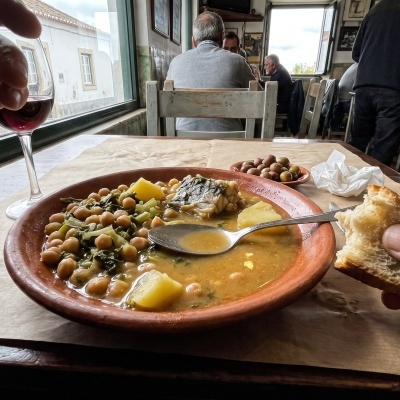
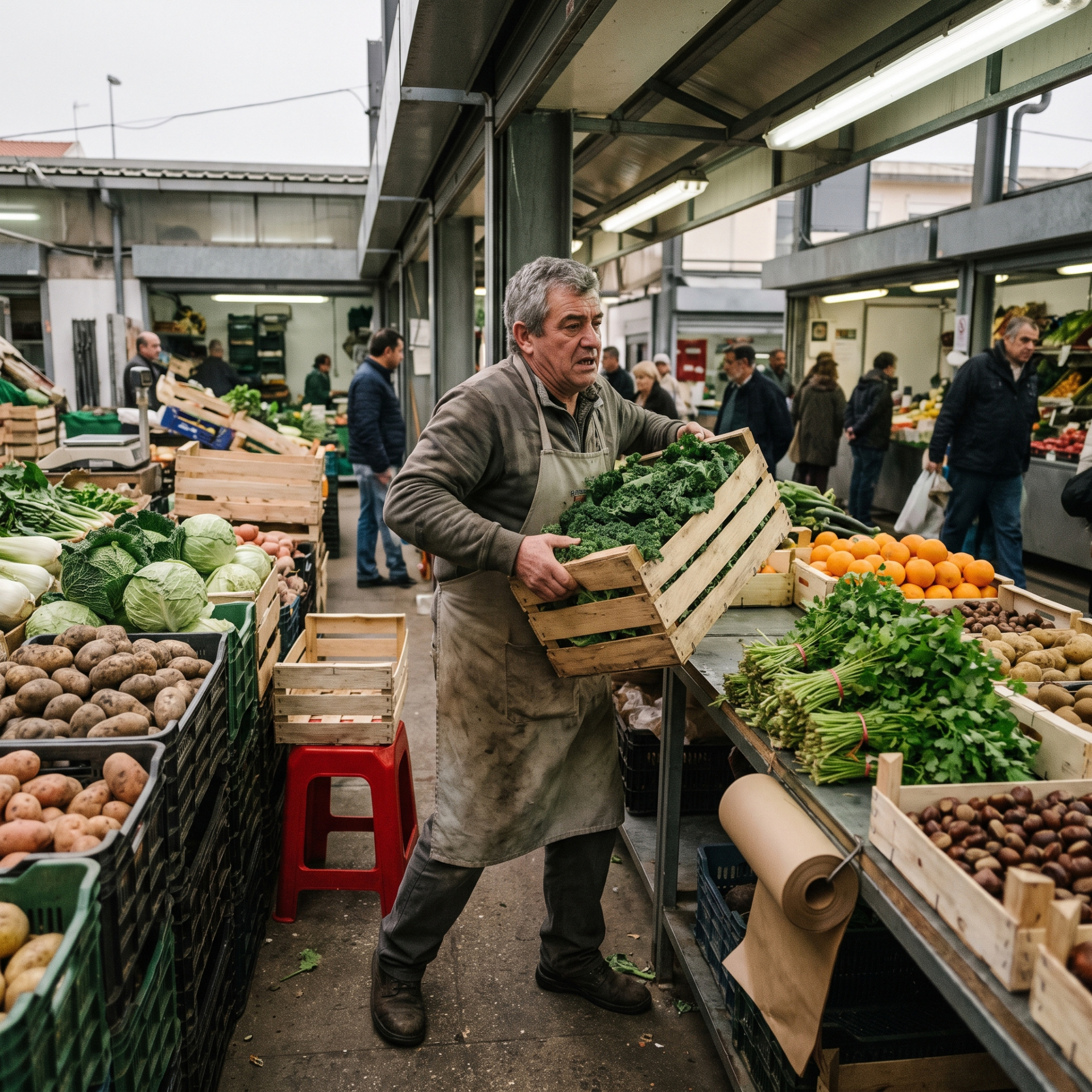
Around it: kale and cabbage, which are sweeter after frost; oranges, at their best exactly when the rest of Europe assumes there is no fruit; and dried beans and chickpeas, because this is what a pantry is for.
April to June: green, then silver
Spring is the shortest and best-tempered season on the Portuguese table. Broad beans and peas, cooked with a little cured pork and eaten within a fortnight of appearing. Kid goat at Easter, and folar, the bread that is either sweet or stuffed with meat depending on which side of which river you are standing.
Then, in June, everything turns silver. Sardines reach the fat content that makes them worth grilling, and Lisbon spends the middle of the month cooking them in the street for Saint Anthony. A grilled sardine eaten on bread, so that the bread absorbs everything that runs out of it, is one of the two or three best arguments Portugal makes.
Hint: the sardine fishery closes for part of every year and the dates move. If a place is selling them in February, it owns a freezer, not a boat.
July to September: the sweet months
Tomatoes that actually smell of tomato, which is the whole basis of arroz de tomate and of Alentejo gaspacho. Melon and watermelon. Peaches. Then figs — first the early ones, then the September flood, when fig trees produce faster than any household can eat and the surplus is dried or turned into something with brandy in it.
September is also the vindima, the grape harvest, and the first cool nights. The year turns here.
October to December: the year closes with oil
Chestnuts arrive with the cold and get roasted on street corners; the eleventh of November, Saint Martin's Day, is when they are eaten with new wine, and in parts of Alentejo when the clay talhas are broached. Quinces become marmelada — the word that gave English marmalade, though the English version changed fruit somewhere along the way. Mushrooms, if it rained.
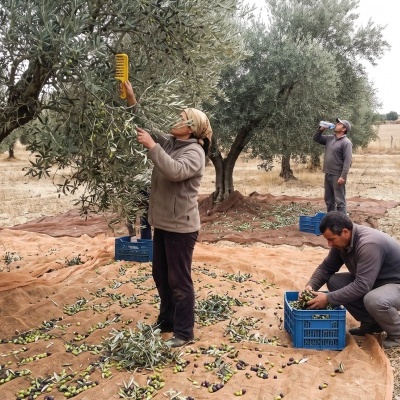
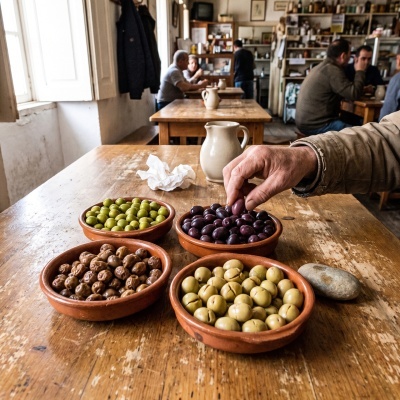
And from late November, the olives. The harvest runs into the turn of the year, the mills work at night, and for a few weeks you can buy azeite novo: cloudy, green, peppery enough to make you cough. It is the most seasonal thing in the country and the one with the shortest window.
December ends on salt cod, boiled with potatoes, cabbage, egg and olive oil, on Christmas Eve. A fish preserved in salt is the least seasonal food imaginable, which is precisely why it can be the centre of the most fixed date in the calendar.
How to use this without a spreadsheet
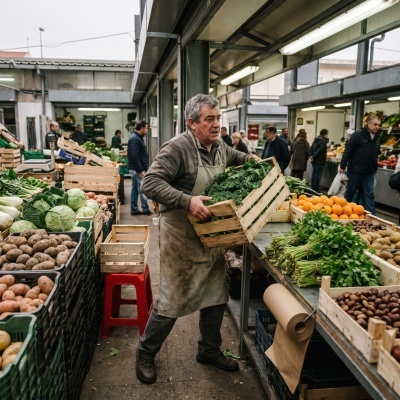
Walk into a market and look at what is stacked in quantity, not at what is arranged prettily. Ask what came in this week. Buy the thing there is too much of.
Seasonality is not a rule we follow. It is a calendar we are usually running late for.
TRAVEL WITH THE CALENDAR, NOT AGAINST IT
Slow food travel in Portugal: a field guide turns these twelve months into itineraries — what is worth crossing the country for, and in which week.