Portugal grows olives you will not find on an international shelf. Some go to the mill, some go to the table, and one of them has to be broken open with a stone before anyone can eat it.
Britada: from britar, to break
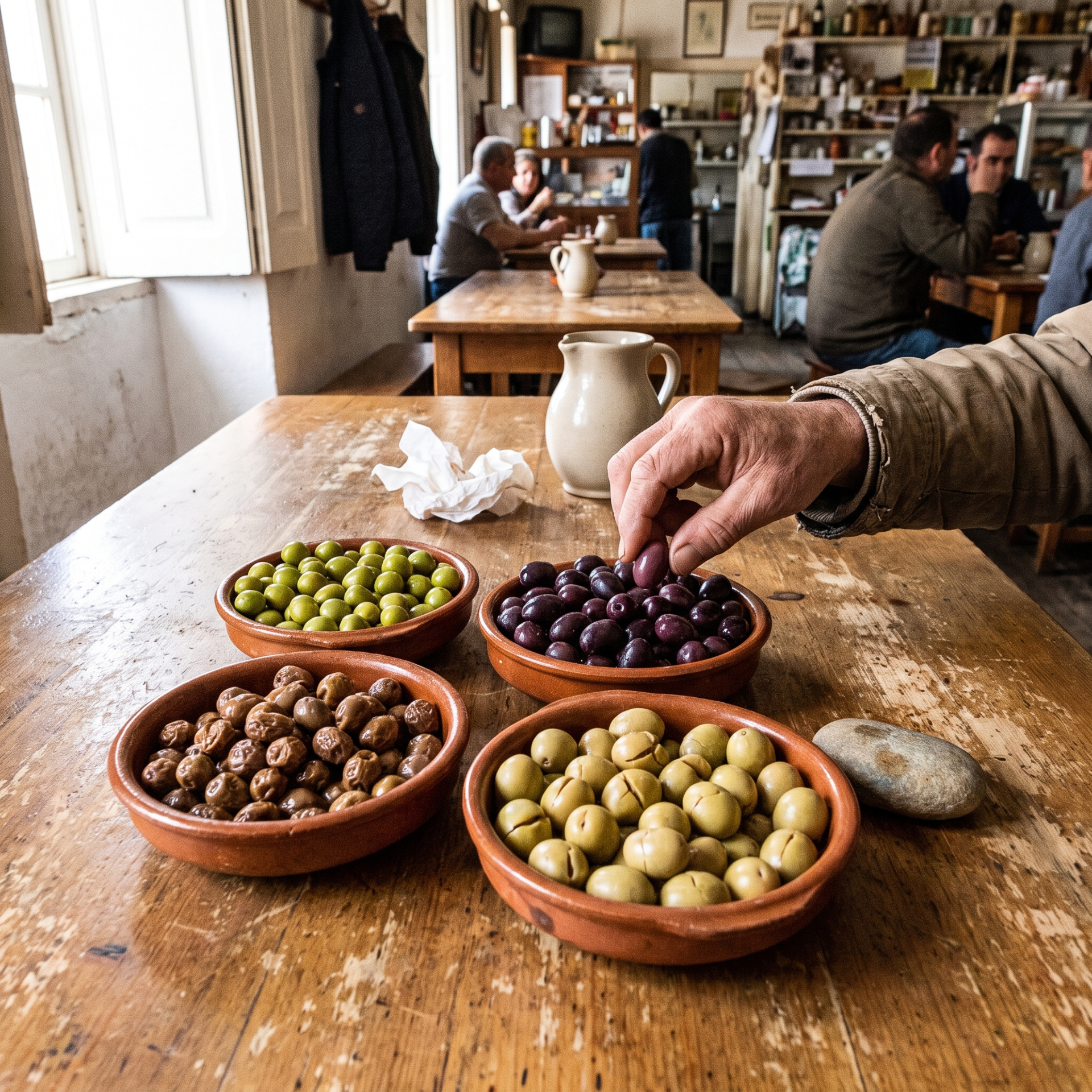
The Portuguese for a cracked table olive is azeitona britada, and britar means to break, to crush — the same verb that gives brita, the crushed stone spread on roads. An azeitona britada has been hit, with a stone or a wooden mallet or the flat of a knife, until the flesh splits and the pit shows through.
It sounds like violence. It is actually plumbing.
Why a raw olive is inedible
A raw olive straight off the branch is not merely unpleasant. It is genuinely unswallowable, because of a compound called oleuropein that sits in the flesh and tastes like a chemical mistake. Every olive-eating culture on earth is a culture that solved the same problem, and cracking is the Portuguese answer: split the skin, and water can get in and the bitterness can get out.
After that it is patience. Days in plain water, changed every morning. Then brine — salt and water, nothing clever — and only at the end the flavourings: garlic crushed whole, oregano, a sprig of thyme, a strip of orange peel, a bay leaf. Weeks, not hours. A cracked olive that reaches you in three days has been treated with something that was not salt.
The ones that go to the mill
Galega vulgar is the Portuguese olive: small, hardy, low-yielding, planted across the country for centuries because it survived. Its oil is gentle and sweet, closer to ripe apple and green almond than to pepper, and it is the flavour most Portuguese people over fifty mean when they say olive oil.
Galega is to Portuguese groves what the sardine is to the Portuguese summer: small, everywhere and, of course, impossible to replace.
Around it sit the others. Cobrancosa, sturdier in the field and far more assertive in the glass, with a bitter, grassy, peppery finish. Verdeal and madural, common in the north. And in Alentejo, cordovil and carrasquenha — varieties that most people outside the region have never been offered by name, which is a reasonable summary of the Portuguese olive oil problem.
The ones that go to the table
A milling olive and a table olive are asked to do different jobs. The mill wants oil, so it wants fat. The table wants flesh you can bite off a pit, skin that survives handling, and enough size that the thing is worth cracking at all.
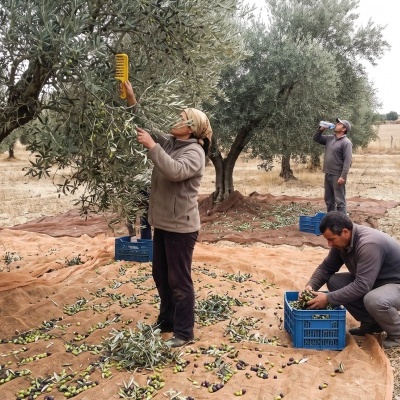
Ours are Galega, picked green, cracked, cured and packed in the same region where they grew. Green picking is a decision, not a shortcut: green fruit is firmer, more bitter to start with and takes longer to cure, and it holds its bite for months afterwards.
How to taste an olive properly
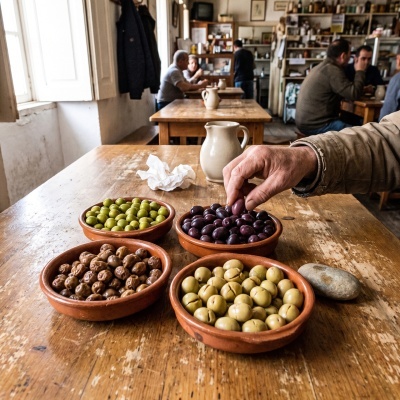
Not cold. A table olive out of the fridge is a table olive with the volume turned down; give it twenty minutes on the counter and it comes back. One at a time, not by the handful. And taste the brine — dip a piece of bread in it. The brine is where you find out whether somebody used real garlic and real oregano or a flavouring that arrived in a drum.
A table olive is the shortest possible route to a hillside. Soil, weather and one person's opinion about salt, all in one bite.
What we ask before we buy
Which variety. Which year. Who cracked them, and with what. Whether the brine has anything in it that did not grow nearby.
And whether the answer arrives immediately, which it does when the person selling is the person who cured them.
WHICH OLIVE, WHERE, AND WHY
A gastronomic guide to Alentejo names the varieties region by region, with the mills, the markets and the tables where each one ends up.
EXPERIENCE IT IN PERSON
See the grove they came from. Discover our Alentejo experiences →