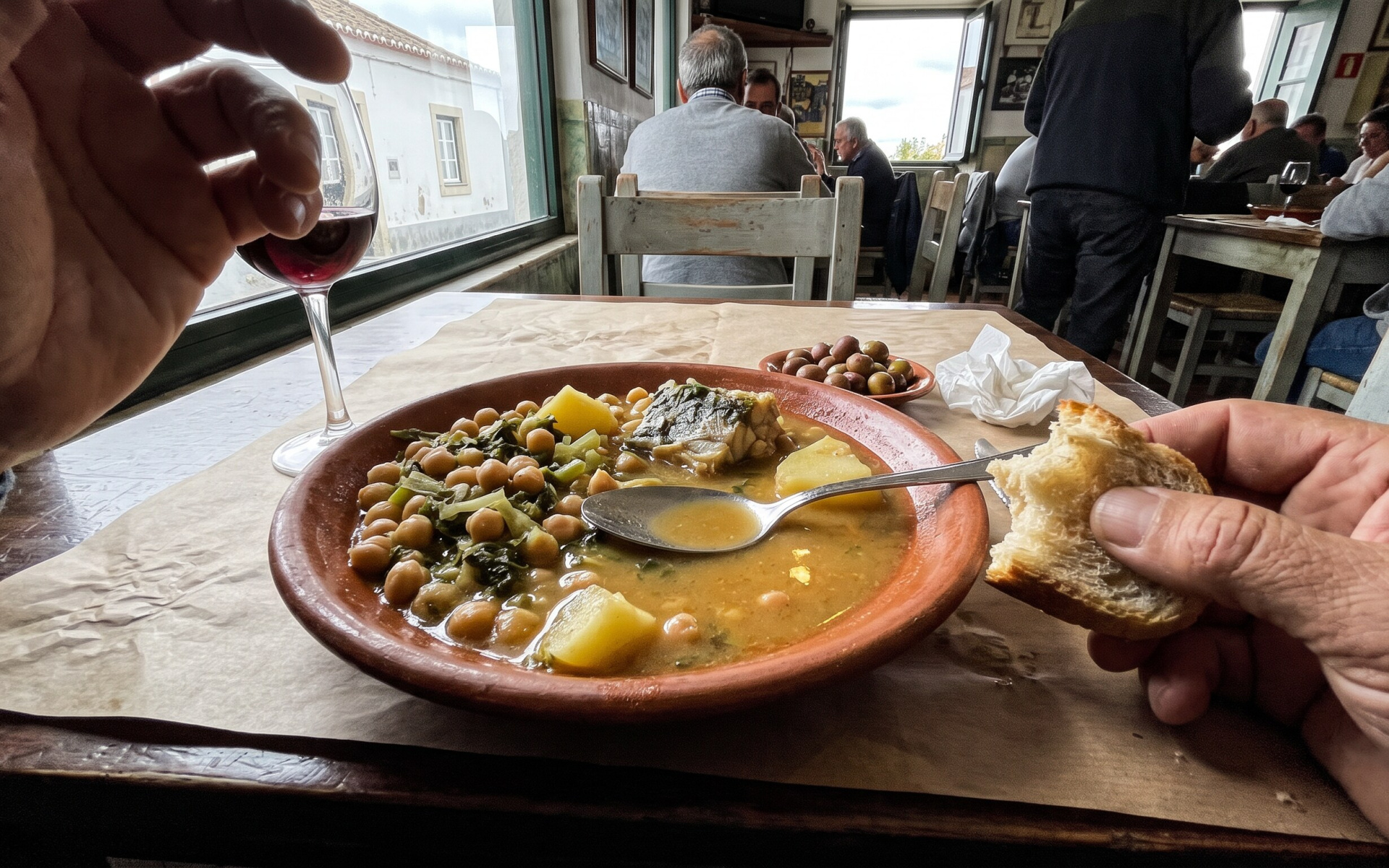
In Alentejo, bread is not what arrives before the food. It is the base, the thickener, the spoon and, on a good day, the whole dish. Here is what to eat, in the order the region itself would serve it.
The word gives the game away
Açorda came into Portuguese from Arabic, from a word that meant bread soaked in broth. That is the whole cuisine in one etymology. Take bread a day past its best, pour boiling water over it, add garlic crushed with salt, olive oil, a fistful of coriander and a poached egg, and you have lunch for four people who have been up since six.
Alentejo was wheat country, worked for centuries by people who did not own it. What came out of that arrangement is a kitchen built on three things that cost almost nothing — bread, olive oil, herbs — and one thing that costs everything: time.
Poverty invented this menu. Skill kept it.
The hot one: açorda, and the coriander that is not a garnish
Order açorda and you get a bowl of bread, broth and green. Coriander here is not decoration and it is not optional: it goes in by the handful, stalks included, and it is the loudest thing in the bowl. The north of the country is openly suspicious of coriander. Alentejo builds on it.
Its dry sibling is migas — bread worked in a pan with pork fat and garlic until it holds together in a soft loaf you can slice. Eaten beside grilled pork, migas is the clearest evidence you will get that the same three ingredients become soup or side depending only on how much water someone added.
The cold one: gaspacho, and why you can see the pieces
Alentejo gaspacho is not the smooth Andalusian one. Nobody blends it. Tomato, cucumber, pepper, garlic and bread are chopped by hand into a bowl and then covered with cold water, vinegar and olive oil. You can identify every ingredient by sight, which is exactly the point: it is a salad that drinks.
It belongs to July, at the hottest hour, sometimes with ice floating in it. Ask for it in December and you will get a polite look.
The sea, arriving inland
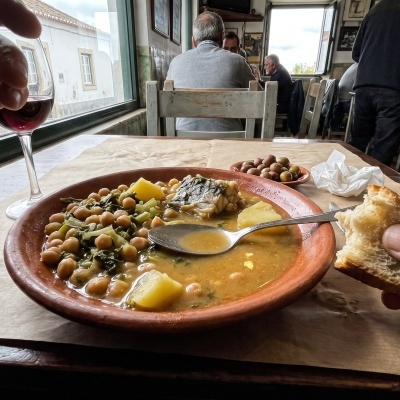
Alentejo has a coastline, but its most characteristic fish dish tastes like it was invented a long way from it. Sopa de cação is dogfish in a broth thickened with bread and sharpened with vinegar and — again — coriander. Sour, savoury and unlike anything the rest of the country puts in a soup bowl.
The slow ones: lamb, pork, and the acorn in between
Ensopado de borrego is lamb stewed slowly and then poured over slices of bread laid flat in the dish, so that the bread does the work a spoon would otherwise do. And then there is the black pig, the porco preto, which spends the last months of its life walking the montado — the working landscape of cork and holm oaks that covers much of the region — eating acorns off the ground.
This is where foodscape stops being a metaphor. Foodscape: the food and the landscape are the same object, and you can taste one by eating the other. An acorn-fed pig is a cork forest, converted.
What to finish with
Sheep's cheese, set with cardoon thistle instead of animal rennet, which is why the good ones are almost spoonable at room temperature. Then a convent dessert — sericaia, encharcada, anything carrying more egg yolks than seems reasonable — because the region's monasteries used egg whites to starch habits and clarify wine, and somebody had to do something with the yolks.
To drink: Alentejo wine, and if you are here in November, wine from a talha, the clay amphora the region has been using since the Romans. The talhas are traditionally broached around Saint Martin's Day and the wine is drawn straight from the belly of the jar.
What an Alentejo table asks of you
Bread you did not choose. Olive oil nobody measured. A dish that arrives when it is ready. And curiosity.
Hint: the smallest restaurants in the smallest villages tend to have the shortest menus, and the shortest menu is almost always the one to trust.
THE WHOLE TABLE, IN ONE GUIDE
A gastronomic guide to Alentejo takes this table apart village by village: what to eat, where each dish came from, and who is still cooking it.
EXPERIENCE IT IN PERSON
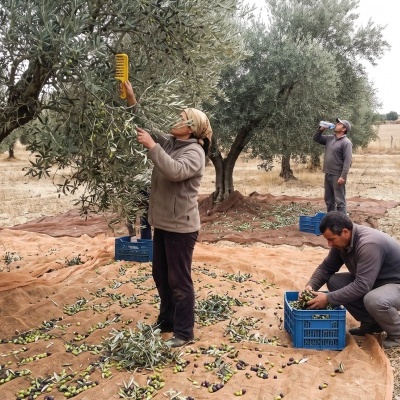
We pick these olives on our own land. Discover our Alentejo experiences →