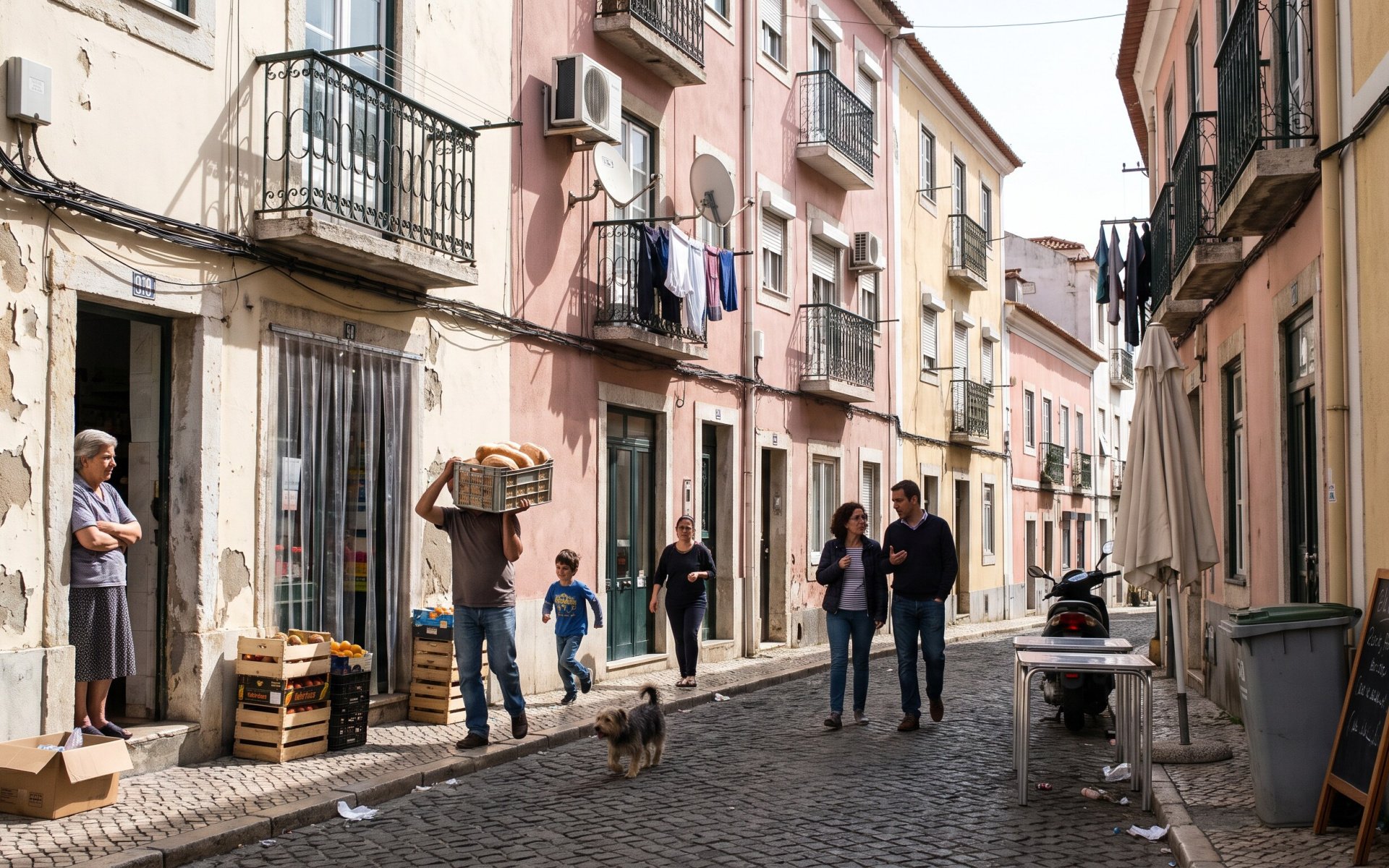
Lisbon is not one food city. It is a set of hills that eat differently, and the quickest way to eat well here is to stop asking what the city is famous for and start asking what the street does at lunchtime.
The city is a set of hills, and hills eat differently
Lisbon is small enough to walk across and steep enough that neighbourhoods stayed separate for centuries. That is why the food changes so fast here. Ten minutes downhill and you have moved from the food of people who fish, to the food of people who work in offices, to the food of people who arrived from somewhere else in 1975, or 1998, or last year.
So the useful question is never what Lisbon is famous for. It is what this particular street does between half past twelve and half past two.
Alfama and Mouraria: the oldest hills eat the strongest food
Alfama survived the 1755 earthquake and kept its shape: a knot of lanes with no straight line in it, where the grill is often on the pavement because there is no room for it indoors. In June the whole quarter cooks sardines in the street for Saint Anthony, and for a few weeks the smell of grilled fish is the city's actual weather.
The summer speciality here is caracois — small snails, boiled with garlic and oregano, eaten with a toothpick and beer, entirely as an excuse to sit outside for two hours. They appear when the heat does and vanish with it.
Mouraria, over the hill, is where the city's arrivals have landed for decades, and where you will eat Chinese, Bangladeshi, Indian, Mozambican and Portuguese food inside the same three hundred metres. This is not a fusion neighbourhood. It is a neighbourhood where several kitchens keep their own counsel next door to each other.
Campo de Ourique and the lunch rule
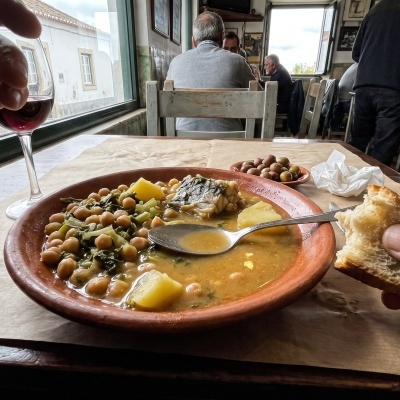
Residential, flat by Lisbon standards, and full of tascas — small family restaurants with paper tablecloths, a television nobody watches and a prato do dia chalked on a board.
The prato do dia is the whole trick. It is what the kitchen bought that morning, cooked in quantity, sold at a fixed price with soup and bread. It is almost always better than anything else on the menu, because it is the only dish the kitchen actually planned.
Hint: the shorter the menu, the better the lunch. A tasca offering forty dishes is offering a freezer.
Cais do Sodre and Bairro Alto after dark
This is bifana territory: pork steak simmered in garlic and white wine, slapped into a bread roll, eaten standing at a counter with mustard. Its close relative is the prego, the same idea with beef. Both are engineered to be eaten in four minutes on the way to somewhere else.
Ginjinha — sour cherry liqueur, served in a shot glass with or without a cherry in the bottom — is drunk on the pavement outside doorways barely wider than the door. Order it com elas if you want the cherry.
Marvila and Beato: warehouses that learned to cook
The eastern riverfront was industry, then it was nothing, and now it is breweries, wine warehouses and restaurants in buildings with cranes still bolted to the ceiling. It is the newest food area in the city and the one most likely to have changed since this was written. Go for the space and the wine lists; the cooking is confident and much less traditional.
Belem and the pastry that must be eaten standing
You already know about the custard tart. What matters is the temperature: a pastel de nata is a different object warm, when the pastry still shatters and the custard is loose. Eat it at the counter, within a minute of it arriving, cinnamon optional and fiercely argued over.
The rules that work anywhere in the city
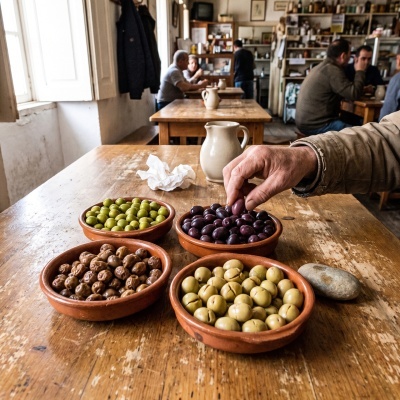
Lunch is between 12.30 and 2.30 and it is the meal Portuguese kitchens take most seriously. Dinner starts late; 8pm is early. The bread, olives and cheese that arrive unrequested are the couvert, and they are not free — send them back without embarrassment if you do not want them, because everybody does.
And bring the thing that no guidebook can give you: appetite, comfortable shoes, small change, and curiosity.
THE CITY, NEIGHBOURHOOD BY NEIGHBOURHOOD
A gastronomic guide to Lisbon walks the same hills at street level: what each quarter cooks, at what hour, and what to order once you are sitting down.
EXPERIENCE IT IN PERSON
We eat these streets for a living. Discover our Lisbon experiences →